Northeast’s leading seamless? Call Us Now 978-405-0017
Connect With Us:


Northeast’s leading seamless? Call Us Now 978-405-0017
Connect With Us:
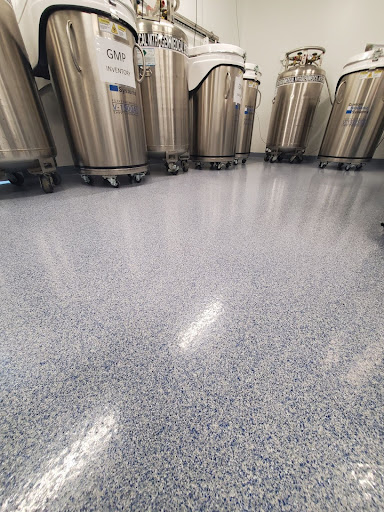
Every surface matters in a hospital, but few impact infection control as directly as the floor. High-traffic corridors, patient rooms, surgical suites and labs all demand flooring materials that can withstand constant use while actively supporting hygiene and safety protocols.
Seamless, non-porous flooring systems eliminate joints, cracks and grout lines where bacteria and moisture collect. This makes cleaning easier, more effective, and supports the strict infection-control standards required in modern healthcare environments.
Here’s how the right hospital flooring system helps create a safer, more reliable facility for patients, staff and visitors.
In healthcare settings, flooring is the frontline defense against contamination and safety risks. The right system supports infection control and protects everyone who enters the facility. When flooring is built for healthcare demands, it optimizes both operational efficiency and the well-being of everyone in the building.
Seamless, non-porous flooring removes the weak points where pathogens thrive. Without cracks, joints or grout lines, bacteria, viruses and moisture have nowhere to hide.
These systems allow the surface to be fully sanitized without damage from frequent use of hospital-grade disinfectants — helping reduce the risk of healthcare-associated infections (HAIs) without compromising the integrity of the floor.
Hospital floors must balance durability with safety, especially in areas prone to spills or heavy foot traffic. Slip-resistant finishes help reduce falls, one of the most common causes of hospital injuries among patients and staff.
Ergonomic and impact-resistant surfaces also minimize fatigue for caregivers who spend long hours on their feet, supporting both safety and productivity.
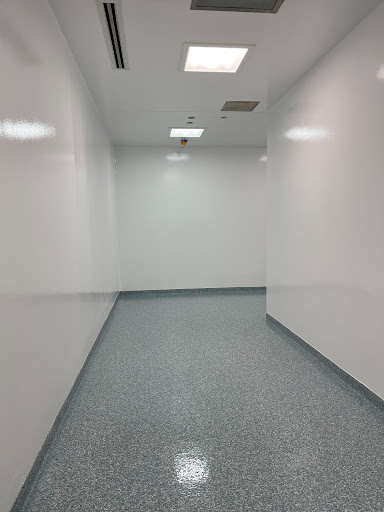
Seamless flooring systems are engineered specifically for environments where cleanliness and durability can’t be compromised. These uninterrupted surfaces support strict hygiene standards while holding up to heavy equipment, rolling loads and continuous cleaning cycles.
Choosing the right flooring solution starts with selecting the most appropriate flooring material for each space:
By matching the right system to each area of a facility, hospitals can support both day-to-day operations and long-term performance goals.
By removing gaps where moisture and microbes typically accumulate, seamless floors allow for thorough, consistent sanitization. Non-porous finishes prevent absorption of spills, bodily fluids or chemical agents, reducing the risk of bacterial growth and cross-contamination.
Ultimately, seamless flooring creates a continuous, easy-to-clean surface that supports a more sterile hospital environment.
Hospital flooring must meet strict regulatory requirements to maintain the safety, accessibility and well-being of patients and staff. Understanding these standards helps facilities choose materials that support long-term compliance and operational excellence.
Flooring in healthcare facilities must comply with ADA requirements to create accessible pathways for patients, visitors and mobility device users. At the same time, CDC guidelines emphasize materials that support infection control, cleanability and environmental safety.
Many healthcare accreditation bodies also require flooring systems that resist moisture, prevent microbial growth and withstand aggressive cleaning protocols. Meeting these standards helps hospitals maintain compliance, protect patients and minimize operational risk.
Slip resistance plays a critical role in preventing falls. The Dynamic Coefficient of Friction (DCOF) rating helps evaluate how flooring performs under real-world conditions, including spills, cleaning solutions and heavy foot traffic.
Selecting flooring with appropriate DCOF ratings helps facilities reduce risk and improve overall safety throughout the building.
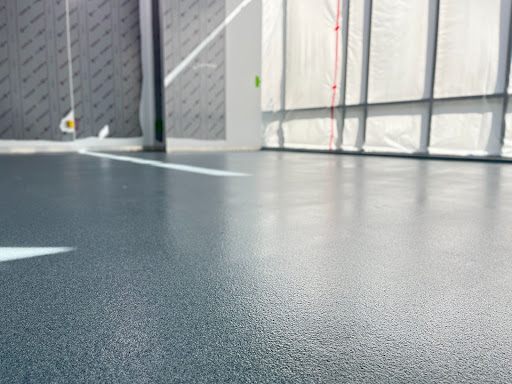
Even the best flooring materials require proper installation and ongoing maintenance to perform at their highest level. With the right processes in place, facilities can extend the life of their flooring systems while maintaining a more reliable environment for patients and staff.
A successful seamless flooring installation begins with meticulous substrate preparation to ensure strong adhesion and a smooth, uniform finish. Resinous or sheet systems are installed to eliminate joints, transitions and gaps.
Resinous flooring is installed in multiple layers, using epoxy or urethane, to create a truly monolithic surface. When done correctly, the result is a single slab of durable flooring that supports infection control from day one.
Non-porous hospital flooring is designed to withstand frequent cleaning cycles, but using the right procedures helps extend its lifespan.
Hospital-grade disinfectants can be used without degrading the surface when materials are properly selected and installed.
Establishing a routine cleaning schedule helps prevent wear, staining and chemical damage that can degrade a surface over time.
In healthcare environments, flooring directly impacts safety, hygiene and long-term performance. When facilities invest in seamless, non-porous systems installed by experienced contractors, they create cleaner, more compliant spaces that promote patient safety and operational efficiency.
Ready to upgrade your facility with flooring engineered for hospital-grade performance? Explore Black Bear Seamless Flooring’s Medical and Healthcare flooring solutions to find systems built for durability and long-term reliability.
Discover the right solution for your project and lay a stronger, safer foundation for every patient and provider who walks through your doors.

Boston, Brookline, Worcester, Northborough, Springfield, Westfield, Chicopee, Waltham, Somerville, Revere, Lynn, Melrose, Canton, Westminster, Leominster, Lowell, Fitchburg, Wrentham, Cambridge, Woburn, Attleboro, Milford, Methuen, Malden, Milton, Arlington
Hartford, New Britain, New Haven, Stamford, Waterbury, Bridgeport, Norwalk, Norwich, New London, Middletown, Danbury, Milford, Fairfield
Manchester, Concord, Keene, Claremont, Nashua, Derry, Salem, Portsmouth
Bangor, Lewiston, Augusta, Caribou, Waterville, Portland, Brunswick
Burlington, Rutland, Brattleboro, Barre, Montpelier, Williston
Providence, Warwick, Newport, Bristol, Pawtucket, Block Island, Cranston