Northeast’s leading seamless? Call Us Now 978-405-0017
Connect With Us:


Northeast’s leading seamless? Call Us Now 978-405-0017
Connect With Us:
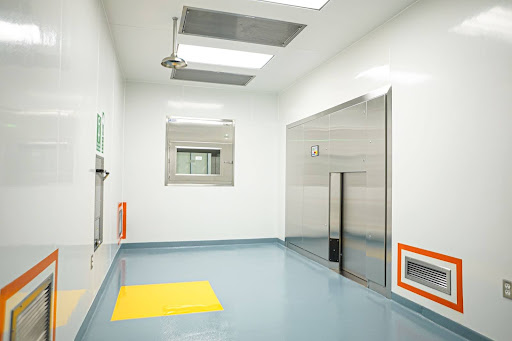
In regulated facilities, every little detail matters. Even the junction where the floor meets the wall can become a major contamination point if left unaddressed.
Traditional square edges trap dirt, harbor bacteria and invite moisture intrusion, compromising even the most thorough cleaning efforts.
Replacing these sharp corners with a seamless, curved transition eliminates one of the most common sanitation failure points in regulated environments. This transition is known as a cove base.
Constructed from materials like epoxy resin, urethane or sheet vinyl, cove base systems integrate directly with floor coatings to form an attractive monolithic surface.
However, a cove base isn’t just about aesthetics. It’s a measurable compliance tool designed to meet and exceed regulatory requirements from day one.
By replacing sharp corners with a smooth, continuous radius, cove bases:
Traditional 90-degree corners allow debris, organic matter and microbial growth to accumulate beyond the reach of standard cleaning equipment. Cove bases remove these traps, making cleaning more effective and thorough.
Curved profiles block water from seeping behind walls, reducing the risk of structural degradation, mold and bacterial growth.
Continuous, crevice-free surfaces are easier to clean and monitor, supporting faster workflows and making contamination immediately visible during inspections.
High-performance cove base materials withstand repeated exposure to harsh disinfectants, sanitizers and cleaning agents required in regulated environments.
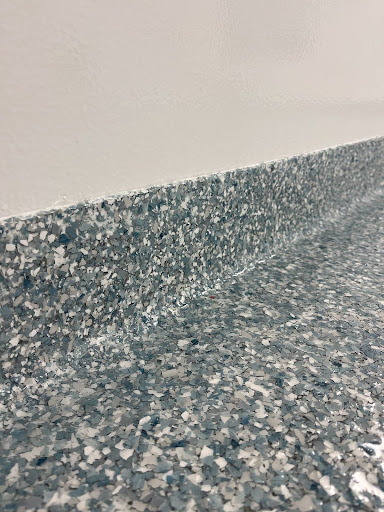
In regulated facilities, compliance isn’t optional — it’s mandatory. Cove bases must be engineered to meet the most stringent standards across multiple industries.
Cove bases are a standard feature in facilities where contamination control is non-negotiable. From healthcare centers to food and beverage processing plants and biotech laboratories, they help meet strict industry regulations.
During inspections, a continuous, seamless cove base signals a proactive approach to contamination control, reducing the risk of audit failures, production shutdowns and costly remediation.
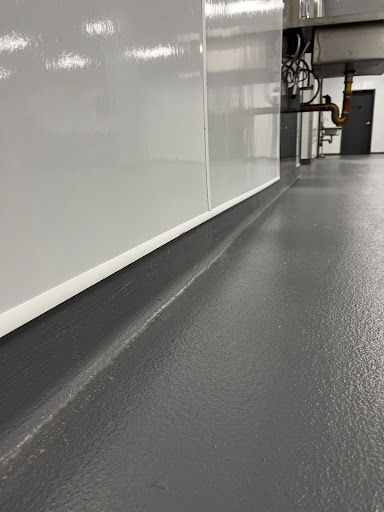
The right choice of material and profile is critical to the long-term performance of cove bases. Seek out trusted flooring experts with high-performance solutions that are engineered for regulated environments.
Cove base systems are available in multiple material formulations, each engineered to address specific performance requirements and environmental conditions.
The two most popular surfaces are:
Both epoxy and urethane cove bases bond seamlessly with floor coatings to create a surface without joints or seams, reducing microbial traps and supporting compliance.
Cove base installations require expert analysis to maximize hygiene, compliance and durability. Standard installations can range from 4 to 6 inches in height with a 1 to 2 inch radius, designed to perfectly eliminate corners while maintaining structural integrity.
Proper installation and ongoing maintenance protocols will determine the long-term performance and compliance value of your cove base system.
Partnering with a flooring professional with years of experience in regulated facilities will ensure that every cove base meets both appearance standards and compliance requirements.
Key installation factors include:
Routine maintenance is the key to preserving the performance and compliance value of cove bases. Your facility should implement:
Cove bases remain effective only when they are kept clean and maintained. The installation team should train your staff on best practices to ensure compliance is prioritized year-round.
Cove base systems aren’t just an extra detail — they’re a frontline defense for hygiene, compliance and operational efficiency.
At Black Bear Seamless Flooring, our cove bases work just as hard as your facility, setting the standard for cleanliness, efficiency and audit readiness.
With years of experience in regulated environments, our durable epoxy and urethane materials eliminate gaps and contamination traps while ensuring full compliance with cGMP, HACCP, FDA, USDA, CDC and ISO standards.
Explore our wall systems today and build a facility ready for every inspection.

Boston, Brookline, Worcester, Northborough, Springfield, Westfield, Chicopee, Waltham, Somerville, Revere, Lynn, Melrose, Canton, Westminster, Leominster, Lowell, Fitchburg, Wrentham, Cambridge, Woburn, Attleboro, Milford, Methuen, Malden, Milton, Arlington
Hartford, New Britain, New Haven, Stamford, Waterbury, Bridgeport, Norwalk, Norwich, New London, Middletown, Danbury, Milford, Fairfield
Manchester, Concord, Keene, Claremont, Nashua, Derry, Salem, Portsmouth
Bangor, Lewiston, Augusta, Caribou, Waterville, Portland, Brunswick
Burlington, Rutland, Brattleboro, Barre, Montpelier, Williston
Providence, Warwick, Newport, Bristol, Pawtucket, Block Island, Cranston