Northeast’s leading seamless? Call Us Now 978-405-0017
Connect With Us:


Northeast’s leading seamless? Call Us Now 978-405-0017
Connect With Us:
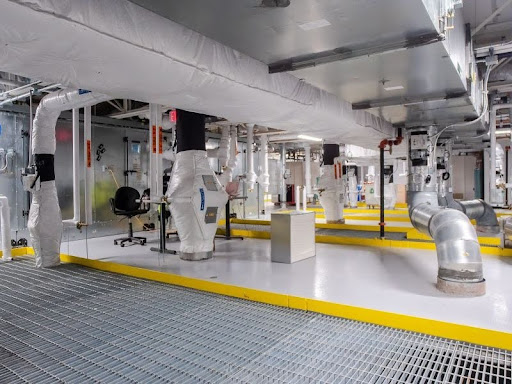
Industrial flooring isn’t just underfoot — it bears the weight of everything that happens above it. For facilities managers and plant engineers, a single misstep can be costly, and many of the biggest flooring mistakes stem from untested assumptions.
So, what does it take to make the right call for your facility? It starts with a clearer understanding of what drives performance and long-term value.
Here’s how to separate myth from reality so every decision you make is one you can stand behind with confidence.
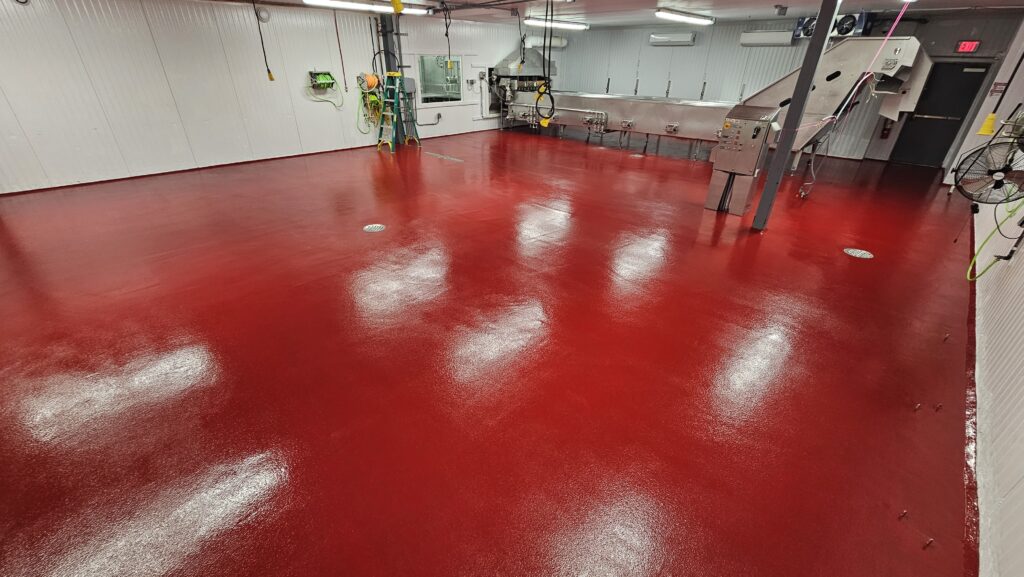
Of all the misconceptions that shape industrial flooring decisions, this one may carry the steepest price tag.
Surface preparation is frequently treated as a preliminary formality or a box to check before the real work begins. However, in practice, it can influence the outcome of the entire project.
The performance of any industrial floor is only as strong as the surface it’s bonded to. Proper preparation helps coatings and overlays adhere fully, allowing the finished floor to meet the demands placed on it from day one.
Facilities that invest the appropriate time and attention at this stage consistently see longer service life, fewer repairs and stronger overall returns on their flooring investment. It’s one of the highest-value decisions you can make in a flooring project and sets the entire installation up for lasting success.
A floor that looks good makes a strong impression, but aesthetic considerations should never take center stage in decision-making.
The most enduring industrial floors are designed from the inside out. Slip resistance, load-bearing capacity, chemical compatibility and thermal stability all shape how a floor performs under the real-time conditions of daily operation.
Epoxy flooring speaks to this directly. Its strength lies in a system engineered to bond deeply and perform consistently across decades of demanding use.
When these properties are given the attention they deserve, the result is a floor that holds up beautifully over time.
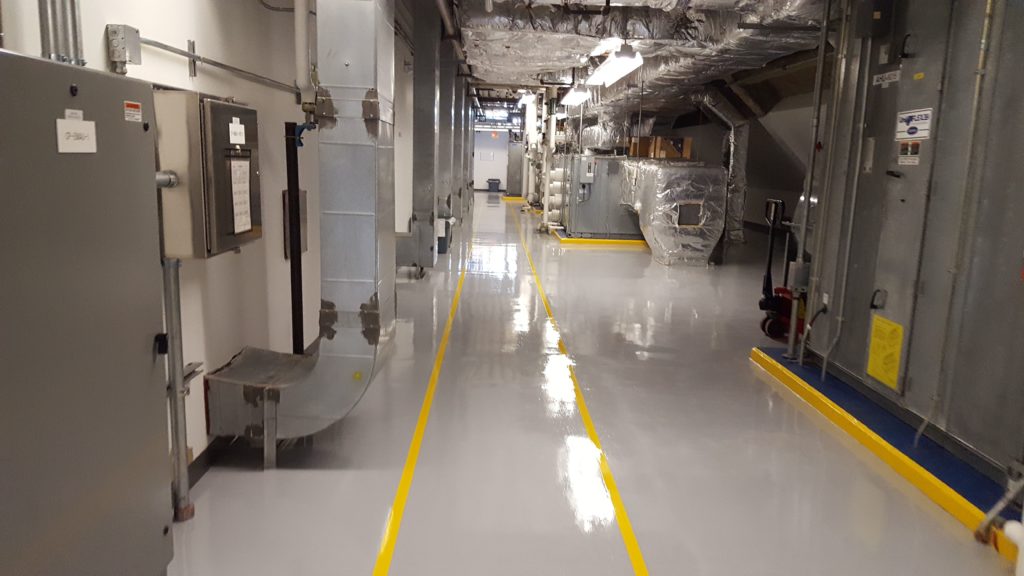
When a floor feels stable and secure underfoot, it’s natural to assume that it is. However, tactile confidence isn’t the same as verified safety, and the gap between the two is where many workplace incidents begin.
Slip resistance, surface integrity and load tolerance all change over time, gradually and often invisibly. Regular testing gives facilities a precise and current picture of where their floor actually stands, long before any decline becomes visible or dangerous.
Facilities that include regular safety assessments in their maintenance programs reduce risk, protect employees and visitors, keep operations running smoothly and extend the life of their flooring investment.
Sustainability has earned a firm place in modern facility planning, but a lingering perception remains — choosing an environmentally responsible floor requires compromising performance.
Today’s sustainable products are engineered to meet the same rigorous demands as any conventional alternative.
Low-emission formulations, recycled content and responsibly sourced materials are now paired with the chemical resistance, load capacity and service life that industrial environments require.
Facilities that have made the shift are discovering that a floor can meet operational standards while supporting sustainability goals, without sacrificing one for the other.
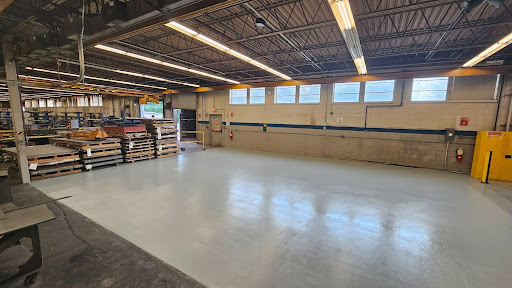
At first glance, industrial floors can look the same. In reality, there’s a wide range of systems, each designed for specific conditions.
Treating them as interchangeable is a common reason flooring projects fail to reach their full potential.
Industrial flooring spans a range of systems, each with its own performance profile. Choosing the right one begins with a clear understanding of what the floor will actually face.
For example, conductive flooring is purpose-built for environments where electrostatic discharge poses a genuine risk, protecting sensitive equipment and the people who work around it.
MMA flooring, on the other hand, offers rapid cure times and excellent cold-temperature performance for facilities where downtime is costly and operational windows are tight.
Budget pressure is a reality in every facility, and when flooring options are laid side by side, the lowest number in the column can be a compelling place to land.
Floors that offer the best long-term returns are judged by their full service life, not just upfront cost. Installation quality, maintenance needs, resistance to environmental demands and expected lifespan all determine a floor’s true cost.
A system that performs reliably for 20 years with minimal intervention will almost always outperform a cheaper alternative that demands ongoing attention and early replacement.
Facilities that invest in flooring for the long haul see lasting returns in performance, durability and cost savings.
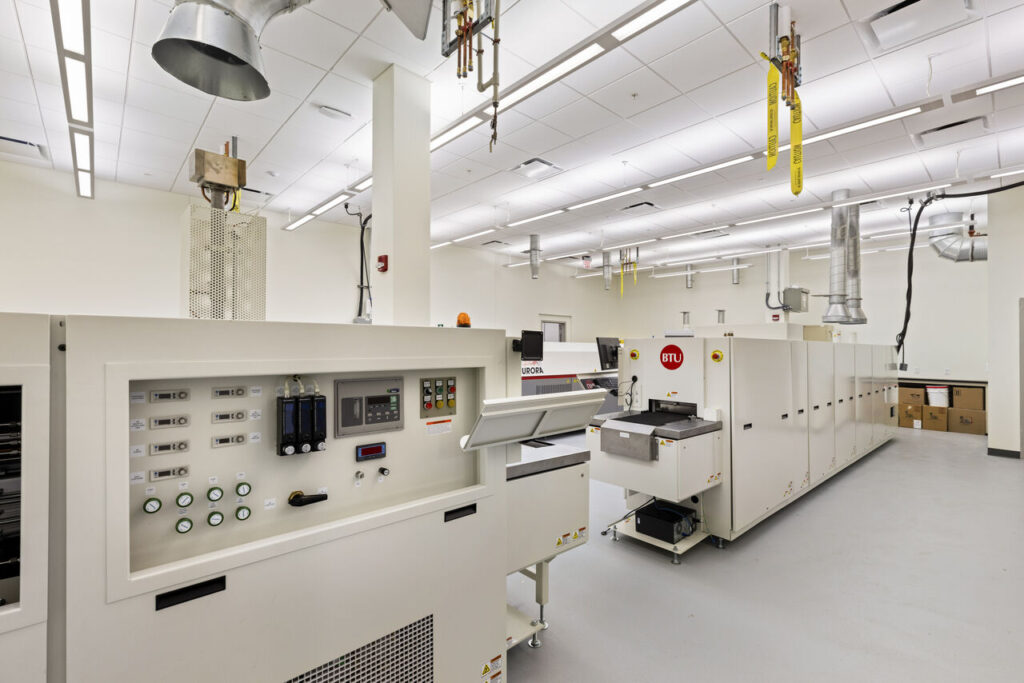
Industrial flooring installation can seem straightforward — materials arrive, the surface is prepared and the system is applied. Behind that sequence lies a depth of knowledge and precision that takes years to master.
Even the highest quality flooring system will underperform in the wrong hands. A contractor who knows industrial flooring brings not just technical skill but the judgment to anticipate challenges before they become problems.
Facilities that invest in a qualified, experienced installer are protecting everything that comes after: the performance, the warranty and the long-term value of the floor itself.
Choosing the right contractor is the final and most important specification decision of the entire project.
No two facilities are alike, and your floor shouldn’t be either.
At Black Bear Seamless Flooring, our industrial flooring range combines expert systems, unmatched know-how and long-term durability to meet the demands of even the toughest industrial environments.
Explore our solutions and find a floor that performs for your facility today and grows with it tomorrow.

Boston, Brookline, Worcester, Northborough, Springfield, Westfield, Chicopee, Waltham, Somerville, Revere, Lynn, Melrose, Canton, Westminster, Leominster, Lowell, Fitchburg, Wrentham, Cambridge, Woburn, Attleboro, Milford, Methuen, Malden, Milton, Arlington
Hartford, New Britain, New Haven, Stamford, Waterbury, Bridgeport, Norwalk, Norwich, New London, Middletown, Danbury, Milford, Fairfield
Manchester, Concord, Keene, Claremont, Nashua, Derry, Salem, Portsmouth
Bangor, Lewiston, Augusta, Caribou, Waterville, Portland, Brunswick
Burlington, Rutland, Brattleboro, Barre, Montpelier, Williston
Providence, Warwick, Newport, Bristol, Pawtucket, Block Island, Cranston