Northeast’s leading seamless? Call Us Now 978-405-0017
Connect With Us:


Northeast’s leading seamless? Call Us Now 978-405-0017
Connect With Us:
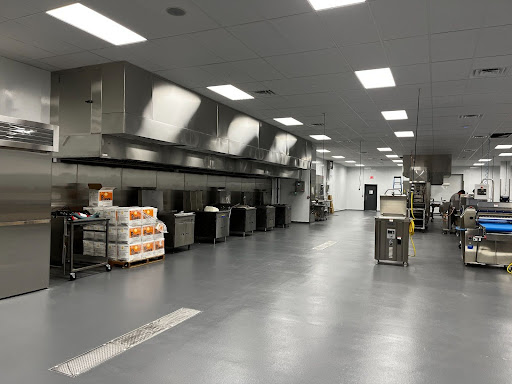
Even the most efficient commercial operations can stumble without the right flooring. In food and beverage facilities, floors endure relentless foot traffic, spills, heavy machinery and constant cleaning, all while needing to meet strict FDA safety and USDA sanitation standards.
So, choosing the right commercial kitchen flooring isn’t just smart, it’s essential for your success. But what exactly makes flooring FDA-compliant, and why does it matter for long-term performance and safety?
From slip resistance to cleanability and documentation, here’s what you need to know about commercial kitchen flooring to keep your facility safe, efficient and inspection-ready.
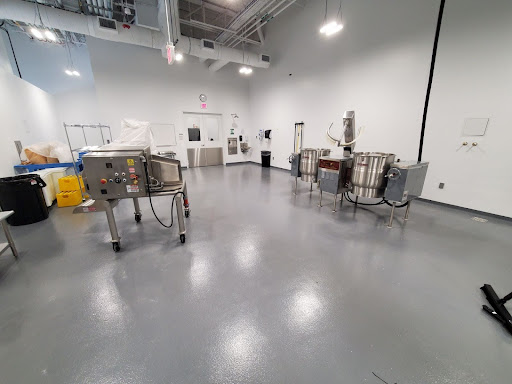
Commercial kitchen flooring is one of the most vital components in food and beverage environments. It directly impacts safety, hygiene and regulatory compliance. Choosing the right flooring ensures not only durability and ease of maintenance but also helps protect employees and customers from accidents and contamination.
Floors in food and beverage facilities must meet strict sanitation standards to prevent contamination and maintain a clean working environment.
Using seamless, non-porous materials like resin or urethane helps prevent bacterial buildup and simplifies the cleaning process. Adding non-slip or chemical-resistant coatings can further help maintain worker safety and better meet USDA, FDA and HACCP compliance requirements.
This often includes sloping floors toward drains and adding an integral cove base where the floors meet the walls to remove seams that can trap moisture and bacteria.
Poor flooring can cause contamination, costly downtime and safety risks. Cracked or porous surfaces, for instance, can harbor bacteria and lead to regulatory violations. Over time, these problems drive up maintenance costs and compromise employee safety, product quality and ultimately consumer safety.
Food and beverage facilities must meet all FDA and USDA regulations to create a safe working environment. Complying with these standards protects consumers and helps businesses avoid costly fines and production shutdowns.
Flooring systems that support FDA-and USDA-compliant operations should be:
Popular options include epoxy, polyurethane and methyl methacrylate (MMA), which offer seamless surfaces that prevent bacterial growth. These coatings are typically finished with antimicrobial additives or textured aggregates to further support compliance.
Beyond choosing the right materials, regulatory compliance also requires proper testing and documentation. Floors must undergo performance testing for slip resistance, chemical resistance and bond strength to verify they meet FDA and USDA standards.
Regular audits and third-party checks help ensure that flooring systems continue to meet these regulations, so keeping accurate installation and maintenance records is essential.
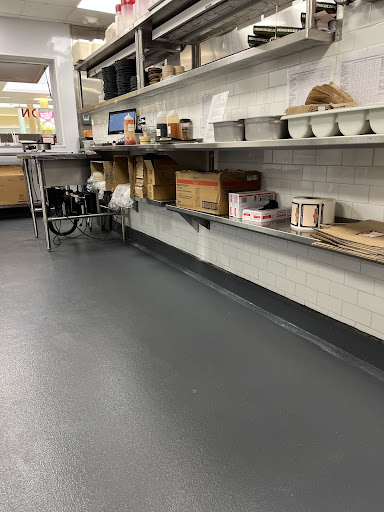
As we’ve seen, commercial kitchen flooring must withstand heavy foot traffic, heat, grease and chemicals while preventing bacterial growth. It also needs to provide a safe, stable surface that minimizes slips and trip hazards in fast-paced environments.
At Black Bear Seamless Flooring, we typically recommend one of the following FDA-compliant systems for food and beverage facilities:
Seamless flooring systems are a top choice for FDA-compliant kitchens thanks to their durability and hygienic properties. They eliminate grout lines and cracks where bacteria can grow, creating a continuous surface that’s easy to clean and maintain.
Commercial kitchen flooring must also perform well under wet, greasy and high-traffic conditions. Anti-slip and chemical-resistant systems can improve worker safety and extend the floor’s lifespan even in harsh environments.
Proper installation and consistent maintenance are the keys to helping commercial flooring thrive in demanding food and beverage environments. When installed correctly, resin floors form a seamless, durable surface that minimizes risks, streamlines cleaning and supports daily operations.
Ongoing care keeps that performance strong. Non-porous resin floors are built to handle aggressive cleaning agents, high-pressure washings and frequent sanitation without breaking down.
Regular inspections and timely touch-ups maintain slip resistance, prevent wear and keep you compliant over the long term, so you can rest assured that your flooring will continue to perform safely, efficiently and as intended.
Strong floors build strong operations. With FDA-compliant materials and slip-resistant finishes, Black Bear Seamless Flooring’s systems are cost-effective and engineered to last, keeping your facility safe, sanitary and efficient for years to come.
Let’s build your next floor right. Discover Black Bear Seamless Flooring’s high-performance industrial flooring solutions today and see how performance and compliance can go hand in hand.

Boston, Brookline, Worcester, Northborough, Springfield, Westfield, Chicopee, Waltham, Somerville, Revere, Lynn, Melrose, Canton, Westminster, Leominster, Lowell, Fitchburg, Wrentham, Cambridge, Woburn, Attleboro, Milford, Methuen, Malden, Milton, Arlington
Hartford, New Britain, New Haven, Stamford, Waterbury, Bridgeport, Norwalk, Norwich, New London, Middletown, Danbury, Milford, Fairfield
Manchester, Concord, Keene, Claremont, Nashua, Derry, Salem, Portsmouth
Bangor, Lewiston, Augusta, Caribou, Waterville, Portland, Brunswick
Burlington, Rutland, Brattleboro, Barre, Montpelier, Williston
Providence, Warwick, Newport, Bristol, Pawtucket, Block Island, Cranston